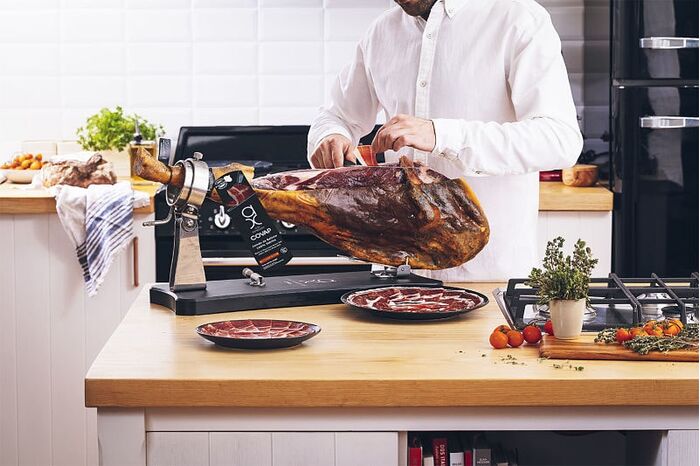
How do you cut a Bone-In Pork Shoulder Acorn-Fed 100% Ibérico?
08/25/2021 |
To truly respect and value the unique product that is COVAP’s Bone-In Pork Shoulder Acorn-Fed 100% Ibérico, it’s important to know how to best enjoy it. You want to let it speak for itself: there is a story behind every one of it’s luscious slices. Only then can you really taste it and feel that indescribably unique sensation every time you take a bite.
That’s why we’re going to explain in detail everything you should know about the cut, texture, flavors, and different nuances on your palate. That way, when you taste this delicacy, you can savor every sensation.
However, before we get started on how to cut COVAP’s Bone-In Pork Shoulder Acorn-Fed 100% Ibérico, you should know how to select the ideal piece. Once you’ve done that you can start the cutting process.
To start, pay close attention to the appearance of the piece. A high-quality, cured bone-in pork shoulder consists of various parts or cuts that in Spain are known as: maza, contramaza, jarrete (hock), caña, and pezuña (hoof).
- Maza: This is the outer part of the shoulder. It contains a larger quantity of lean meat and wider slices than the contramaza.
- Contramaza: You will find this in the interior part of the shoulder and it is divided into two zones next to the funny bone.
- Jarrete: This is the most fibrous part, found near the hoof. Because it is the thinnest part and the most cured, it is perfect for cutting into small cubes.
- Caña: This is our reference for the quality of the pork shoulder. A thin caña is a sign that the pig has been active, an important quality for the infiltration of fat.
- Pezuña: The hoof should be black, as this is one of the signs for identifying the Iberian pig breed.
Now that we have a good understanding of the different parts, we can start learning how to cut COVAP’s Bone-In Pork Shoulder Acorn-Fed 100% Ibérico. Here is a step-by-step tutorial on the best way to cut and enjoy this quality product.
Tools for Cutting
When you’re working with a star product, you have to use the proper tools. You will need the following:
- Jamón knife: long and flexible to cut thin slices
- Wide-blade knife: This serves to remove the exterior fat and meat[1]
- Paring knife: Makes more precise cuts in angled zones and separates the meat from the bone
- Honing steel: This keeps the knife blade in the best conditions
- Tweezers or tongs: Tweezers or tongs will help you remove the slices and place them on the plate without manipulating the product too much.
Cured Bone-In Pork Shoulder Positioning
You have to ensure that the Bone-In Pork Shoulder Acorn-Fed 100% Ibérico is well positioned in the ham holder. Once it is stable, you can start to remove the first layers of the thick skin and yellowed fat.
If you’re going to consume the pork shoulder in 10-15 days, only remove the thick skin from the area you are going to slice. However, if you’re going to eat the entire pork shoulder in one day, you can completely remove all the skin and fat, leaving the piece ready to cut.
*Warning: Don’t discard the layer of white fat that appears under the layer of yellowed fat. It’s this healthy fat that makes COVAP’s Bone-In Pork Shoulder Acorn-Fed 100% Ibérico so fantastic.
Cutting the Contramaza
You want to start slicing from the part closest to the hoof. At first, the slices will be smaller, but they will start to grow in size as you continue to cut.
As you cut, you should use one hand to move the knife softly, without applying force. Your free hand serves to remove the cut slices and carefully place them on the plate.
It’s crucial that the slice you cut contains part of the healthy fat as well as the meat. That way you can fully appreciate every one of the nuances of the cured pork shoulder.
Once you have finished cutting between the areas closest to the hoof and the funny bone, which will appear in the center, you can start to slice the part found between the other side of the funny bone and the shoulder blade. Thus, finishing the contramaza section.
Preserving the cured bone-in pork shoulder
If you want to preserve the pork shoulder you’re cutting, you can use the first layers of fat and skin you removed at the beginning of the process to cover the piece. Make sure the white fat stays in contact with the meaty part. With this technique, the fat will protect the cured pork shoulder and keep it from drying out.
You can also use plastic wrap and cover it with a cotton towel to protect it from light and contact with the air.
Cutting the Maza
Once you have finished cutting all the meat off the contramaza, turn the pork shoulder and start slicing the maza.
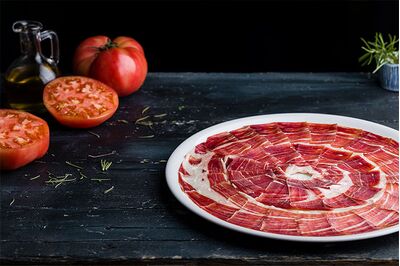
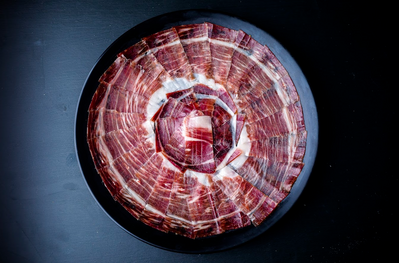
You should also pay special attention when it comes time to plate. Place the slices in consecutive order, and line up each slice with the grain of the meat.
The Third Cut
To start the third cut, you will have to turn the pork shoulder again, keeping the fat side up. At this point in the cutting process, the posture of the knife will be vertical instead of horizontal.
Cutting the Jarrete
This area is especially delicious. After cutting this area, you’ll be finished cutting the most important parts of COVAP’s Bone-In Pork Shoulder Acorn-Fed 100% Ibérico.
Cutting small cubes from the pork shoulder
Once we have finished cutting the main areas of the cured pork shoulder, we want to take full advantage of our piece and remove every last morsel available
The part situated on the scapular spine (next to the remaining meat), you can cut into small cubes.
In the same way, you can utilize the white fat, a part with tons of oleic acid, or use the bone for different types of broths.
This last point concludes the step-by-step guide on how to cut COVAP’s Bone-In Pork Shoulder Acorn-Fed 100% Ibérico.
Now all you need to learn is how to serve cured bone-in pork shoulder to your guests and offer them a quality product that’s handled in the best way possible. If you want to know more about the parts of the pork shoulder, how to serve it, or how to cut COVAP’s Bone-In Pork Shoulder Acorn-Fed 100% Ibérico, just closely follow the detailed videos of our expert slicer.
Recent posts
© 2026 COVAP. S. Coop. And. Ganadera del Valle de los Pedroches - Spain
#COVAPDigital